Structured Data: The SEO Advantage That Helps AI Understand Your Website


As AI continues to be embedded in search and our behaviours evolve, one powerful yet often overlooked tool stands out as a competitive advantage: structured data.
What is structured data and why should you care about it?
Structured data – often implemented through schema markup – is a standardised way of adding context to your website’s content so search engines can better understand it.
Think of it this way: in the past, data was like a giant warehouse filled with unlabelled boxes. Structured data acts as a labelling system, transforming that warehouse into an organised library. Each “box” of content has a tag that explains what it is – whether it’s a product, a recipe, an event, or a review – making it far easier for search engines to interpret and retrieve the right information.
How has structured data been used historically?
Structured data has always been important for SEO. Traditionally, it was most valued for powering rich snippets – enhanced search results such as review stars, recipe instructions, event details, FAQs, and product information.
These eye-catching features improved click-through rates, made results more visible, and helped sites stand out in crowded SERPs. For years, adding schema markup has been one of the most reliable ways to increase search visibility, even without changes to ranking algorithms.
Google provides detailed structured data documentation on Search Central, explaining how to use JSON-LD schema markup to help search engines understand and classify page content.
Why structured data is even more important now with AI
What has changed is why structured data is now essential. In today’s AI-driven search environment, its role has expanded beyond presentation to comprehension.
Fueling AI-Powered Results
Structured data is increasingly used to power personalised search results, product recommendations, and generative answers in SERPs.
In short, while structured data has always delivered value through rich snippets, it’s now also the backbone of AI comprehension – without it, your content risks being misunderstood or overlooked.
Clear Communication to AI
LLMs want to understand your content, not just index it. Schema markup provides that clarity.
Context Over Keywords
AI looks for meaning and relationships, not just keyword matches. Structured data ensures Google knows whether “Apple” is a fruit or a brand.
Knowledge Graph Building
Schema helps build a content knowledge graph, allowing search engines to connect the dots between different pieces of information on your site and beyond.
Practical examples of structured data in action
- E-commerce: Highlight key product details like pricing, availability, brand, and shipping or returns. Google now even supports specifying your sitewide return policy in Organization schema, streamlining your product listings.
How it Appears on Google Results:

Users will see this displayed as a product-rich result in Google, showcasing your product image, name, price, store availability, and brand – often featured in the ‘Popular Products’ carousel for increased visibility and click-through potential.
- FAQ: Adding FAQ schema can surface common questions and answers directly in search results, improving visibility and positioning your brand as an authority.
How it Appears on Google Results:

Users will see this displayed as a standard organic Google result, featuring a blue clickable title, a short meta description, and collapsible FAQ dropdowns that expand to show quick answers.
- Articles and Blogs: Using the Article or BlogPosting schema helps Google understand your content type, author, and topical relevance. This can unlock features like Top Stories or enhanced previews in SERPs.
How it Appears on Google Results:

Users will see this displayed as a rich article result in Google, featuring your publication name, thumbnail image, headline, and publish date often showcased in the Top Stories carousel or with enhanced content previews.
How schema markup works
In technical terms, schema markup is a code added to your pages (in formats like JSON-LD) that tells search engines what your content means, not just what it says.
For example: On a fitness website, a “30-Minute HIIT Workout” page can use the “HowTo” schema type to show workout steps, duration, and ratings directly in search results.
Here’s how the schema code looks like in your HTML:
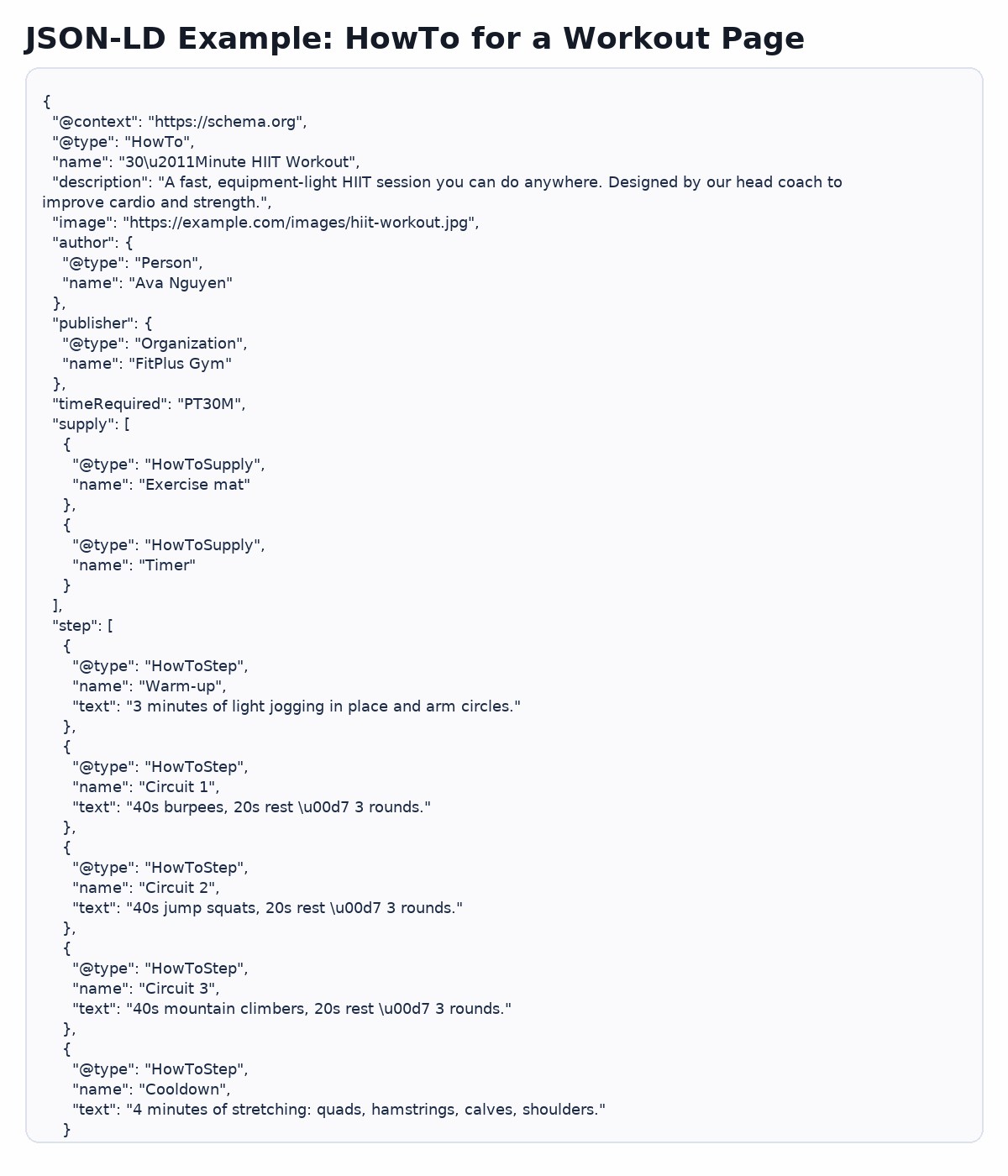
In the above example, you can see each property of the schema describes a part of the workout. When Google crawls your page, it reads the schema markup to extract details like the workout title, duration, rating, and step list.
This helps your page appear as a rich snippet in Google’s search results, displaying key details like ratings, duration, or steps directly beneath your title. You can check whether your schema markup is implemented correctly using Google’s Rich Results Testing Tool, which shows how your page might appear in search results.
How Users see this In Google Results:

The growing importance of structured data
Structured data isn’t new – it has always been a cornerstone of SEO success, powering rich snippets and improving search visibility. But in the age of AI, it can be argued that its importance has grown.
By implementing schema markup effectively, you’re not only helping your site stand out visually in search results – you’re giving search engines (and their AI systems) the context they need to understand and promote your content.
Structured data has evolved from a nice-to-have SEO enhancement into a non-negotiable foundation for intelligent search. The earlier you embrace it, the more future-proof your website will be.
-
![]()
Why brand authority matters more than ever | SEO/AEO
Aug 2026 4 min read -
![Lead generation depicted visually.]()
5 essentials that drive sales on an ecommerce website
Aug 2026 4 min read