Visitors don’t become customers by accident.
It takes strong user experience, SEO, technical performance and ongoing optimisation, all working together, to convert browsing into purchases. Good design might get someone’s attention, but it won’t get them to check out on its own.
Across the ecommerce projects we work on, one pattern holds: the sites generating consistent sales treat their website as part of a broader digital marketing strategy, not something that exists on its own. Every click, interaction and page has to earn its place, and businesses that understand this are the ones seeing quality sales come through.
Why some websites convert and most don’t
A high conversion rate doesn’t happen by chance. It’s the product of thoughtful planning across web design, development and SEO, all working under a consistent marketing approach.
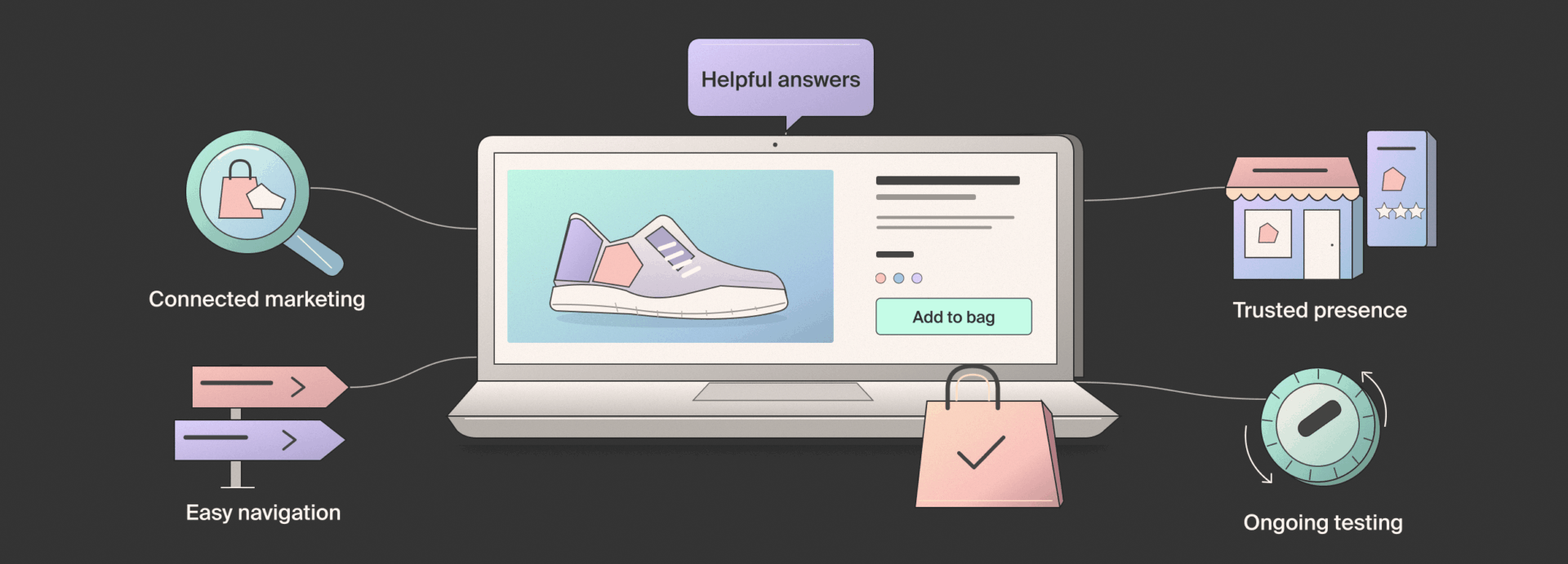
No single element does the job on its own. Trust, clear answers to customer questions and an effortless path to purchase all come from these pieces working together.
Whether you’re working with a digital marketing agency or improving your own ecommerce strategy, these five essentials provide the foundation for stronger website conversions.
1. Prioritise a holistic marketing strategy
Ecommerce sites rarely convert well when SEO, paid media, UX and content are managed in isolation. A product page can be perfectly optimised for search and still lose the sale if the checkout flow is clunky, or a paid campaign can drive strong traffic that lands on a page with no clear path to purchase.
Treating these channels as parts of one strategy, rather than separate projects, means decisions in one area account for their effect on another. SEO content should feed into the same messaging used in paid campaigns. UX decisions should account for where traffic is coming from and what those visitors already know. Promotional calendars should align with stock planning and seasonal search demand rather than being decided separately.
Businesses that manage these functions together tend to see fewer gaps between attracting a visitor and converting them, since every channel is working towards the same outcome instead of pulling in different directions.
2. Why shoppers leave before they even see your products
Shoppers who can’t find what they’re looking for don’t ask for help. They leave.
Clear navigation and well-built filters reduce the number of clicks between a shopper landing on a site and finding a product they want to buy. This matters more as catalogue size grows. A store with a handful of products can get away with basic navigation, but one with hundreds or thousands of items needs filters that accurately reflect how customers actually shop, such as by size, colour, price range or category, rather than how the business happens to organise its inventory internally.
Filters can also provide SEO value when implemented correctly. Optimised filtered category pages can target more specific search intent by creating dedicated, indexable pages around relevant search terms and pre-filtered product selections. This can help capture valuable long-tail searches, provided the pages are carefully structured to avoid duplicate or thin content.
Getting navigation right means testing it against real shopper behaviour, not assuming a logical structure to the business is equally logical to a customer browsing for the first time.
3. What your product descriptions don’t answer
Product-level FAQs are one of the most easily missed elements on an ecommerce site, and one of the most effective. Shoppers rarely buy on the strength of a photo and a price. Before adding something to cart, they check sizing, materials, compatibility, delivery timeframes and return policies, often more than once and often on their phone.
Product-level FAQs answer these questions at the point a shopper is deciding whether to buy, rather than sending them off to a help centre or a competitor’s site. Questions like “does this fit true to size” or “how long until delivery” reduce cart abandonment and cut down on repetitive queries landing in customer service inboxes.
Well-written FAQs also carry SEO and AEO value. They tend to mirror the exact phrases customers search for, which helps with organic visibility and with surfacing in AI-powered search results, where direct answers outperform generic product descriptions.
The best-performing FAQs are specific to the product rather than generic across the catalogue. A question about wash care on an AFL scarf requires a different answer to one on a jersey, and questions relevant to a scarf, such as club colours or sizing, won’t apply to a football. Getting this right means building FAQs around what customers are actually asking, drawn from support tickets, reviews or search queries, rather than what a business assumes they want to know.
4. Create a consistent digital presence across every platform, backed by social proof
Customers rarely make a decision after visiting just one channel.
They may first discover your products through SEO, see them reviewed on Instagram, check star ratings and read Google reviews before returning to your site to buy. Written testimonials, video reviews and product ratings all play a part in this process, giving prospective buyers evidence from people who’ve already made the purchase they’re considering.
Image 1: Represents how Zart was able to consolidate their online presence through various NAIDOC content across various digital platforms.
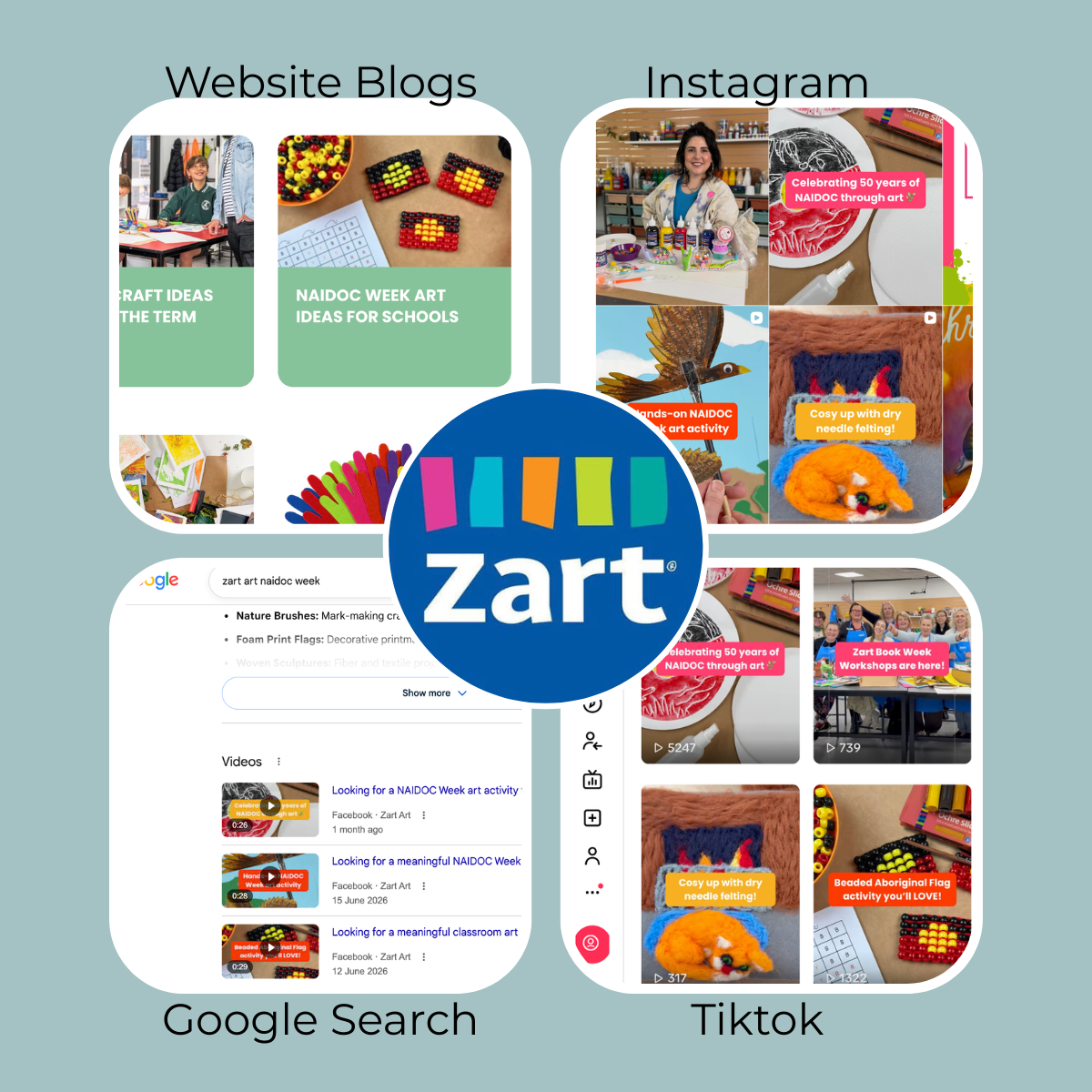
A full-funnel approach gets more from each channel. SEO builds long-term visibility, paid media generates immediate opportunities, organic social strengthens brand familiarity, and social proof reassures shoppers at the point they’re deciding whether to trust you. A well-designed website then converts that demand into sales.
Each channel has a specific role. Together, they create an experience where people can find what they need, see evidence that others have had a good experience, and move to purchase with less friction, while your brand becomes more visible across search engines and AI-powered platforms.
5. Why ongoing testing matters more than a perfect launch
No ecommerce site is finished at launch. Customer behaviour changes, search algorithms evolve and shopper expectations keep rising, which means optimisation has to be ongoing rather than a one-off project.
Product pages, checkout flow and category structure all benefit from continual refinement. Testing headlines, calls-to-action, page layouts and checkout steps can produce meaningful improvements over time, and even small changes to page flow can reduce cart abandonment or lift add-to-cart rates.
Businesses that treat their site as a finished product tend to plateau. Those that keep testing and adjusting tend to keep improving.
When SEO, UX, development and paid media work together on an ongoing basis, the website becomes one of the business’s most productive sales channels.
Frequently asked questions
How long does it typically take to see results from ecommerce SEO?
Timelines vary depending on competition and site history, but most businesses start seeing meaningful movement in organic visibility within three to six months, with stronger gains compounding over a longer period as content and technical foundations mature.
Should small ecommerce stores worry about filters and navigation, or is that only for large catalogues?
Even a smaller catalogue benefits from clear navigation, since shoppers form an impression of a site’s usability within the first few seconds. Filters become more critical as a catalogue grows, but the underlying principle, making it easy to find a product, applies at any size.
What’s the difference between AEO and SEO for product content?
SEO focuses on ranking in traditional search engines, while AEO (answer engine optimisation) focuses on how content gets surfaced in AI-powered search tools and chat-based assistants. Well-structured FAQs and direct answers tend to perform well across both.
How many reviews does an ecommerce product page need before it builds trust?
There’s no fixed number, but even a small handful of detailed, specific reviews tends to carry more weight with shoppers than a large volume of generic ones. Video reviews and reviews with photos generally build trust faster than text alone.

-
![]()
Multi-location marketing for franchise brands: how to scale local visibility
Sep 2026 4 min read -
![How AI search is changing the property buyer journey banner]()
How AI Search Is Changing the Property Buyer Journey
Sep 2026 4 min read