Google’s AI Mode arrives in Australia: How search is evolving (and what it means for you)


After months of testing in the US, Google’s new AI Mode is officially rolling out across Australia – marking a significant step in how people interact with search. For marketers, this isn’t just a feature update – it’s a shift in how audiences find, evaluate, and trust information online.
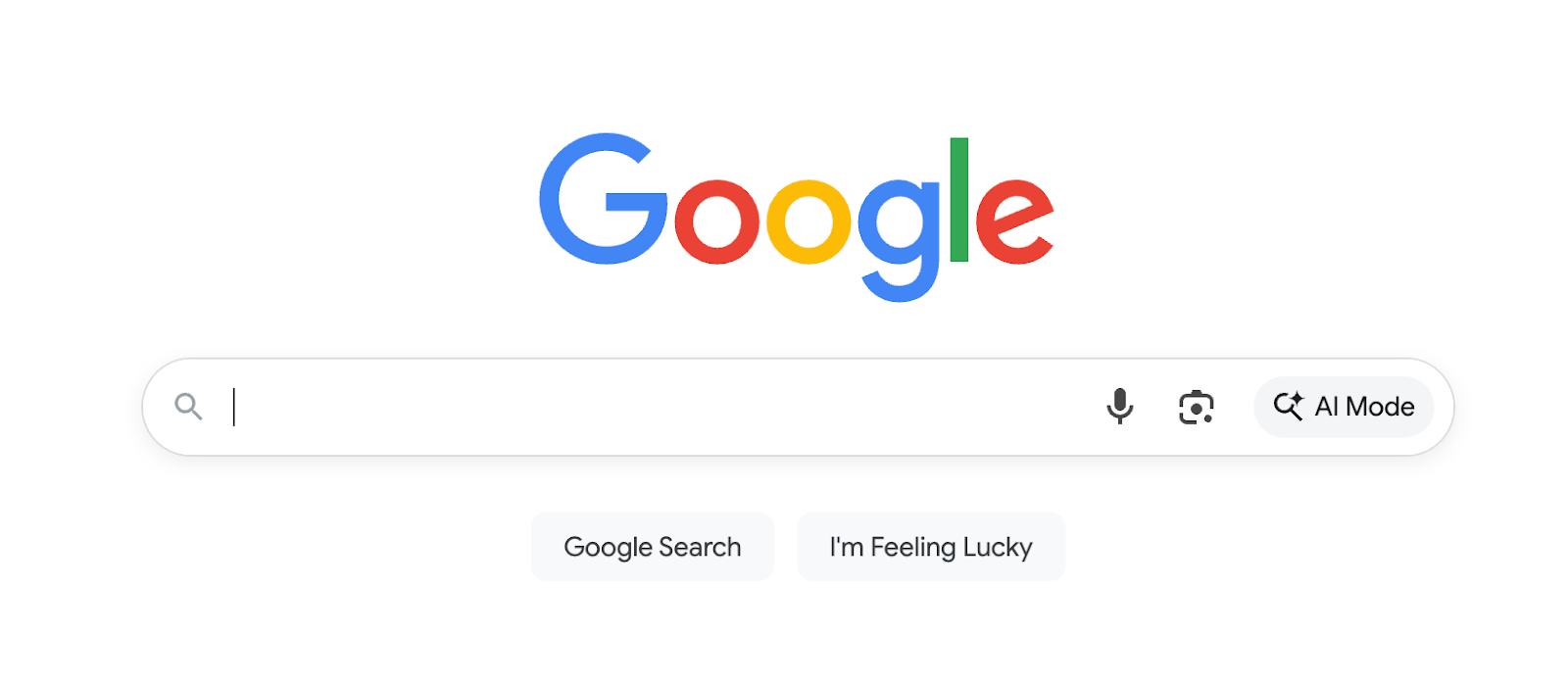
AI Mode introduces a new way to search – one where you can toggle between traditional results and AI-powered overviews. Instead of scanning multiple pages, users can see summarised insights, comparisons, and recommendations generated by Google’s large language models (LLMs).
Think of it as having Chat GPT (Or Gemini in this case) built into your search bar. It doesn’t just show you links; it explains, compares, and creates.
For example:
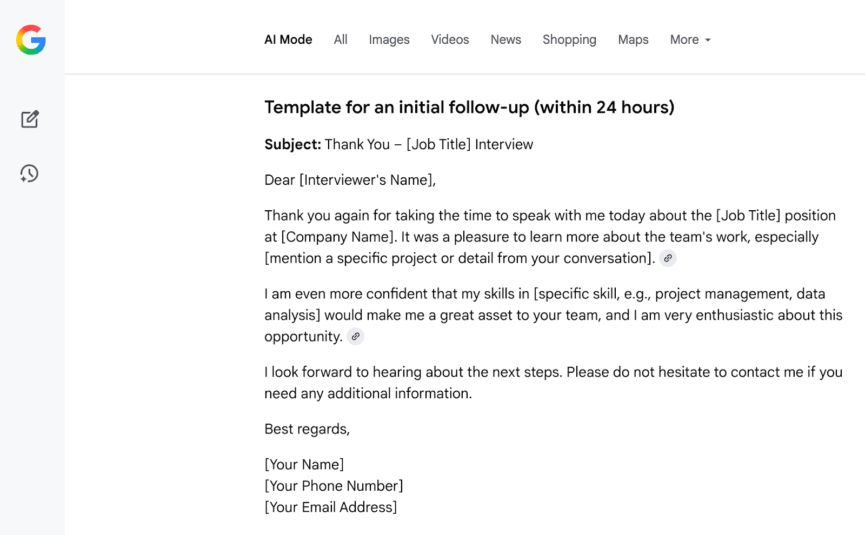
- Asking “how to write a follow-up email after a job interview” could generate a polished draft, ready to adapt and send.
In recent US testing, real users were asked to try Google’s AI Mode side-by-side with traditional search. The results revealed some fascinating patterns in search behaviour – and some important lessons for how Australians are likely to adopt it.
When traditional search still wins
Despite the hype, AI isn’t replacing the familiar Google experience just yet.
Users still turn to traditional search for:
- Quick facts: Simple queries like “Melbourne population” are faster and more trustworthy via direct results.
- Visual browsing: When shopping or exploring styles, people prefer images and product grids over AI summaries.
- Location-based info: For maps, reviews, and opening hours, users instinctively go straight to Google Maps or business listings.
- News: AI summaries can feel vague or delayed – while verified news outlets and apps remain the go-to for breaking stories.
Where AI Mode comes out on top
That said, AI Mode shines in tasks that require analysis, creativity, or nuance:
- Comparisons and analysis: Side-by-side breakdowns and pros/cons lists help users make faster decisions.
- Summarising complex info: AI condenses research across 10+ sources into a single overview.
- Creative and practical prompts: From writing emails to brainstorming ideas, users love the convenience.
- Voice and conversational queries: People naturally ask open-ended questions – and AI Mode handles them with human-like understanding.
Early adopters see AI as a helpful companion, not a total replacement.
A few clear trends are emerging:
- AI is for exploration, not confirmation. Users trust it to research, not to finalise.
- Trust still lies with direct sources. People feel more confident when clicking into brand sites, Google Maps, or official news apps.
- There’s friction in certain categories. Shopping, local searches, and news feel clunkier in AI Mode, with users often reverting to traditional search.
Interestingly, many users don’t distinguish between Google’s different AI tools – Search Generative Experience (SGE), AI Overviews, and now AI Mode often blurs together as “AI results.” This underlines how much Google’s identity is shifting from search engine to search assistant.
The rise of AI Mode changes not just how people search – but how brands need to be found. But it’s not completely changing the game – Answer Engine Optimisation (AEO) is simply just good SEO.
1. Authority and trust matter more than ever
When users see AI summaries, they often check where the information comes from. Websites with clear expertise, credibility, and authorship are more likely to be referenced or surfaced in AI overviews.
We recommend prioritising high-quality, original content that signals trust – from expert bylines to transparent sourcing.
2. Structured, comparison-friendly content wins
AI Mode pulls its insights from structured data, lists, and well-formatted pages.
Using schema markup, tables, and clear headings can help Google interpret and showcase your content.
3. Think beyond keywords – optimise for context
People are asking more conversational, intent-based questions. AI Mode rewards relevance over repetition. Write for how people actually speak – “What’s the best energy plan for renters?” – not just keyword strings. You need to think “what questions would people ask when searching for my product?”.
Google’s AI Mode marks a shift in how Australians explore and engage with information – but not a replacement for what’s come before. AI visibility is built on good SEO. Content that’s structured, trustworthy, and written for humans will continue to perform. What’s changing is how that content is interpreted and surfaced.
Success in this new landscape isn’t about chasing every AI update. It’s about making your brand easy for both users and algorithms to understand – clear structure, credible expertise, and context-rich storytelling.
As AI becomes a crucial part of everyday search behaviour, the brands that win will be the ones that communicate with clarity, confidence, and consistency – not just for algorithms, but for the humans behind every query.
-
![An image of]()
The importance of SEO fundamentals
Jul 2026 3 min read -
![]()
Sod has launched a graduate program
Jul 2026 2 min read