Where your Google ads budget is actually going

Not sure where your Google Ads budget is going? You’re not alone. Many businesses invest in Google ads without full visibility into how that budget is distributed, what’s driving performance, and where real returns are coming from.
At Sod, we take a transparent, data-led approach to Google ad management, helping businesses understand exactly how their investment translates into measurable growth. This is what separates a high-performing Google ads agency from guesswork.
While Google Ads offers a wide range of campaign types including Performance Max, Demand Gen, Display, and Shopping campaigns, this section focuses specifically on Google Search Ads, as metrics such as CPC and Quality Score are most closely tied to Search campaigns and their ability to capture high-intent users actively searching for products or services
How can you tell if your Google Ads budget is being spent effectively?
Effective Google Ads performance analysis isn’t limited to Search, it applies across all campaign types, including Performance Max, Display, YouTube, and Demand Gen.
It comes down to tracking the right metrics:
- Cost per conversion
- Conversion rate (aligned with conversion rate optimisation (CRO))
- Return on ad spend (ROAS)
- Impression share
Through data-driven attribution, you can ensure every dollar of your Google Ads spend is tied to measurable outcomes.
How do Google Search Ads determine what you pay?
At its core, Google Search Ads operate on a cost-per-click model, meaning businesses pay when someone clicks their ad. However, the actual cost is influenced by the Google Ads auction, where factors such as your bid strategy, Quality Score, competition levels, audience targeting precision, and alignment with search intent all work together to determine both ad position and how much you ultimately pay per click.
To maximise performance, a strong Google search ads strategy goes far beyond simply setting budgets. It involves strategically managing paid media budget allocation to align with demand, competitive activity, seasonal trends, and high-intent user behaviour. By focusing spend toward the right audiences at the right moments, businesses can improve click-through rate (CTR), strengthen conversion intent, and drive more efficient long-term performance.
Several factors can significantly influence overall Google Ads costs and efficiency, including:
- Competition within the Google search ads auction
- Your ad rank and bidding strategy
- Audience targeting Google ads precision
- Alignment between ads, keywords, and landing pages
- Search intent targeting and keyword quality
A common issue many businesses face is wasted spend from low-performing clicks. Without a well-structured Google Ads setup, inefficiencies often stem from:
- Broad or irrelevant keyword targeting
- Weak alignment between ads and user intent
- Poor landing page experience
- Ineffective audience targeting strategies
- Over-reliance on branded keywords, which can inflate performance and mask the effectiveness of non-brand campaigns
Addressing these areas through smarter targeting, stronger campaign structure, ongoing optimisation, and continuous refinement is essential to improving overall campaign efficiency. This reflects a major shift in modern digital marketing, where success in Google Ads is increasingly driven by the quality of execution and the strength of strategy.
What causes high cost-per-click (CPC) and low ROI in Google Ads campaigns; and how do we address this?
High CPC and low ROI typically stem from:
- Poor audience and intent targeting
- Inefficient campaign strategy
- Lack of ongoing optimisation
At Sod, we address this by:
- Refining targeting structures (keywords, audiences, and placements)
- Improving ad relevance and creative across all formats
- Enhancing landing page experience
- Working with historical data to structure campaigns
- Using strong communication to understand objectives and target audiences to consistently optimise campaigns
Ultimately, by combining strategic execution, data-led insights, and clear communication, campaigns become more efficient, reducing wasted spend and consistently improving ROI.
How do experienced marketers maximise every dollar of ad spend?
Maximising Google Ads budget comes down to aligning spend with real demand, continuously refining targeting, and ensuring campaigns reflect broader business conditions. This requires a strong Google Ads strategy, ongoing optimisation, and clear communication to understand factors like seasonality, inventory, and audience behaviour. When these elements are aligned, Google campaigns become more efficient, reducing wasted spend and improving overall performance.
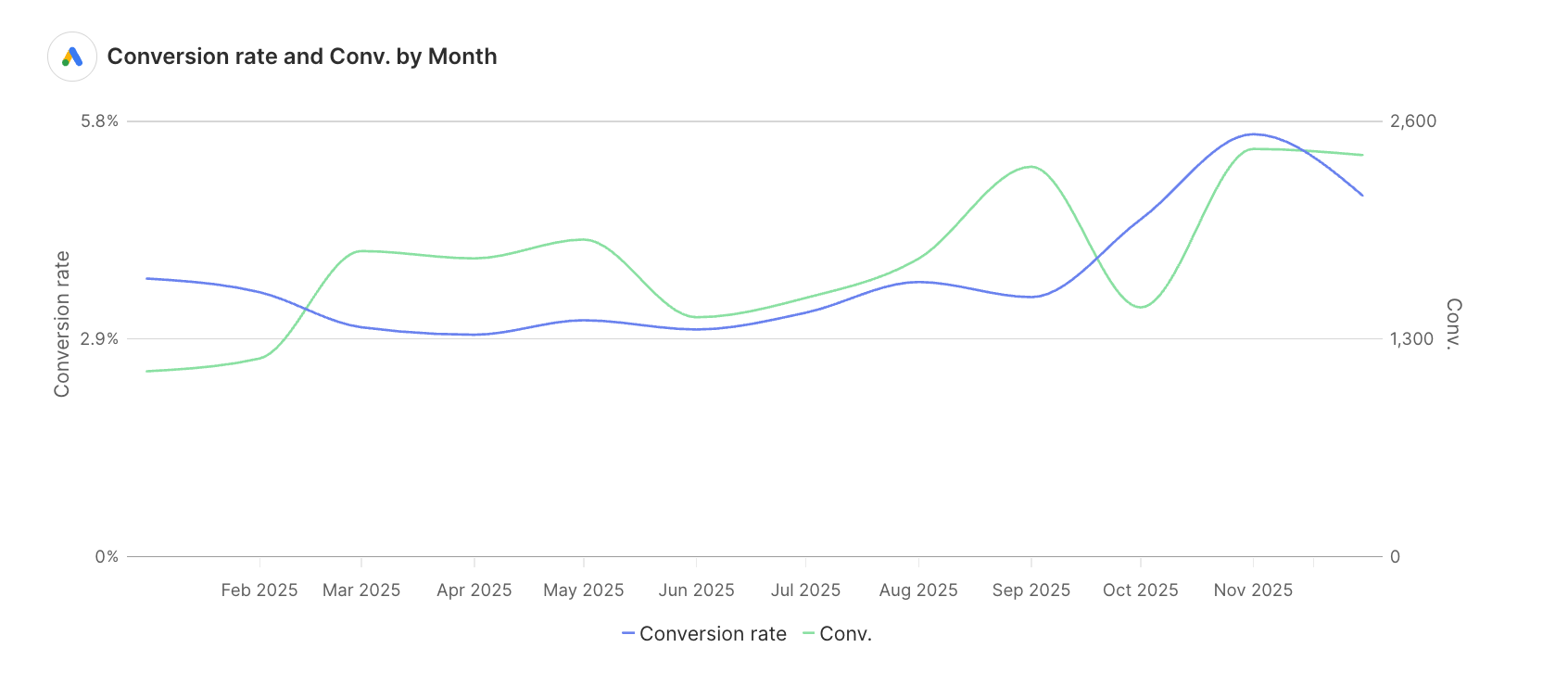
Image 1: A graph comparing conversion rates across key events in the AFL season, demonstrating how strategically increasing ad spend during periods of higher purchase intent contributed to improved conversion rates.
When working with the AFL store, this approach was brought to life through precision and strong collaboration. Campaigns were aligned with key moments like Gather Round, Opening Round, and finals to capture peak demand, while ongoing communication around stock levels ensured spend reflected real business conditions, scaling when inventory was high and refining targeting when limited. We also incorporated insights like team performance and fan engagement to sharpen audience targeting Google Ads, ensuring investment focused on the most valuable segments. This ensured the Google Ads budget was consistently aligned with demand, driving efficient performance and long-term growth.
Why does strategy matter more than budget size in Google Ads success?
A larger Google Ads budget doesn’t guarantee better results. Without a strong advertising strategy, increased spend can simply amplify inefficiencies.
For example, during the Black Friday and Christmas period, Koko Black required a highly strategic Google Ads approach. Rather than simply increasing ad spend during the peak shopping period, we allocated a larger portion of the paid media budget in the weeks leading up to the campaign.
This strategy allowed us to build brand awareness early, engage high-intent audiences before competition intensified, and capture demand before peak season. As a result, we achieved stronger click-through rates (CTR), improved conversion intent, and delivered a more efficient return on ad spend throughout the busiest sales period.
The key takeaway is that successful Google Ads campaigns aren’t just about increasing budget during peak demand, they’re about investing at the right time to influence customers before they’re ready to buy.
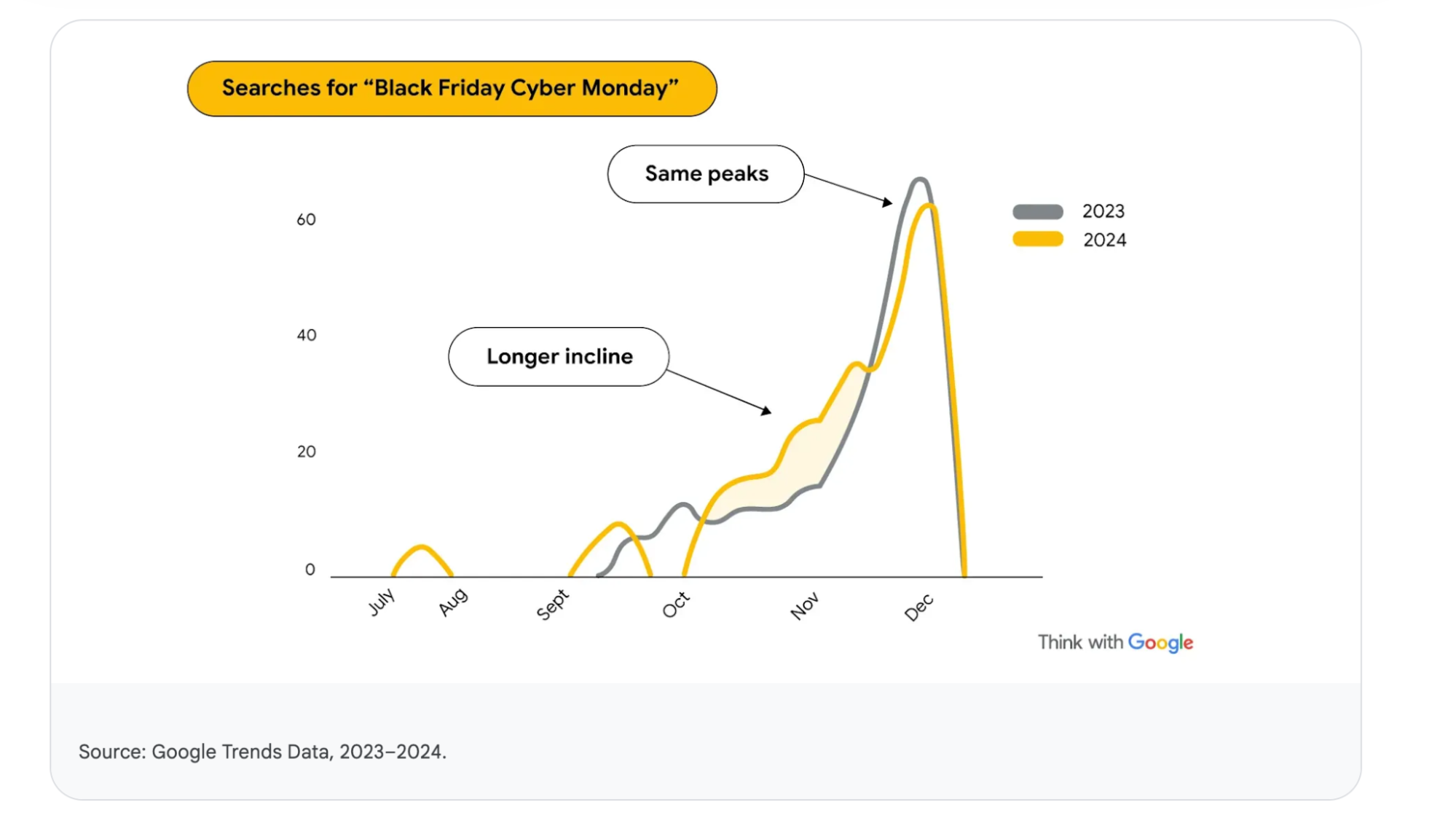
Image 2: The graph shows historical search interest for Black Friday and Cyber Monday, providing insights into when demand peaks and where budget allocation can be optimised to maximise ROAS.
Successful Google Ads management is built on:
- Deep audience understanding
- A clear, data-led Google search ads strategy
- Continuous optimisation
At Sod, we focus on building scalable frameworks that allow brands to grow sustainably, rather than relying on short-term increases in budget
In Google Search Ads, Quality Score is one of the most powerful levers for controlling your budget. It’s influenced by:
- Expected click-through rate (CTR)
- Ad relevance
- Landing page experience
A higher Quality Score lowers your cost per click and improves ad positioning.
In campaigns like the AC/DC store tour launch, where timing was tight and the rollout came with little lead time, the margin for error was minimal. With limited opportunity to build awareness or generate early hype, success depended on immediately capturing users with strong purchase intent. This meant shifting focus toward high-intent keywords, terms that signalled users were ready to buy rather than just browse, while rapidly optimising ad relevance to closely match search behaviour, improving engagement and increasing the likelihood of conversion.
Despite the late launch, this approach delivered very strong ROAS. By prioritising intent over awareness and aligning ads with user behaviour, the campaign cut through competition efficiently. Strong Quality Scores also played a key role, helping maintain cost efficiency while securing competitive ad positions and driving high-performing Google Ads results within a compressed timeframe.
Successful Google Ads performance is no longer driven by budget size alone. Long-term results come from aligning spend with audience intent, refining targeting, improving campaign structure, and continuously optimising performance over time.
As competition within Google Ads continues to grow, businesses that focus on strategy, data-led decision making, and efficient budget allocation are far more likely to reduce wasted spend, improve ROI, and drive sustainable long-term growth.
FAQs
Where does my Google Ads budget actually go?
Your Google Ads budget is distributed across clicks, bids, and placements within the ad auction dynamics, influenced by competition, Quality Score, and targeting.
How can I improve my Google Ads ROI?
To improve Google ads ROI, focus on conversion rate optimisation (CRO), better audience intent targeting, and ongoing campaign optimisation.
What is the most important factor in Google Search Ads performance?
While many factors matter, quality score Google ads, targeting accuracy, and a strong Google search ads strategy are key drivers of success.
Do I need a Google Ads agency to manage my campaigns?
Working with an experienced Google Ads agency ensures your campaigns are strategically managed, continuously optimised, and aligned with business outcomes.
-
![]()
Multi-location marketing for franchise brands: how to scale local visibility
Sep 2026 4 min read -
![How AI search is changing the property buyer journey banner]()
How AI Search Is Changing the Property Buyer Journey
Sep 2026 4 min read