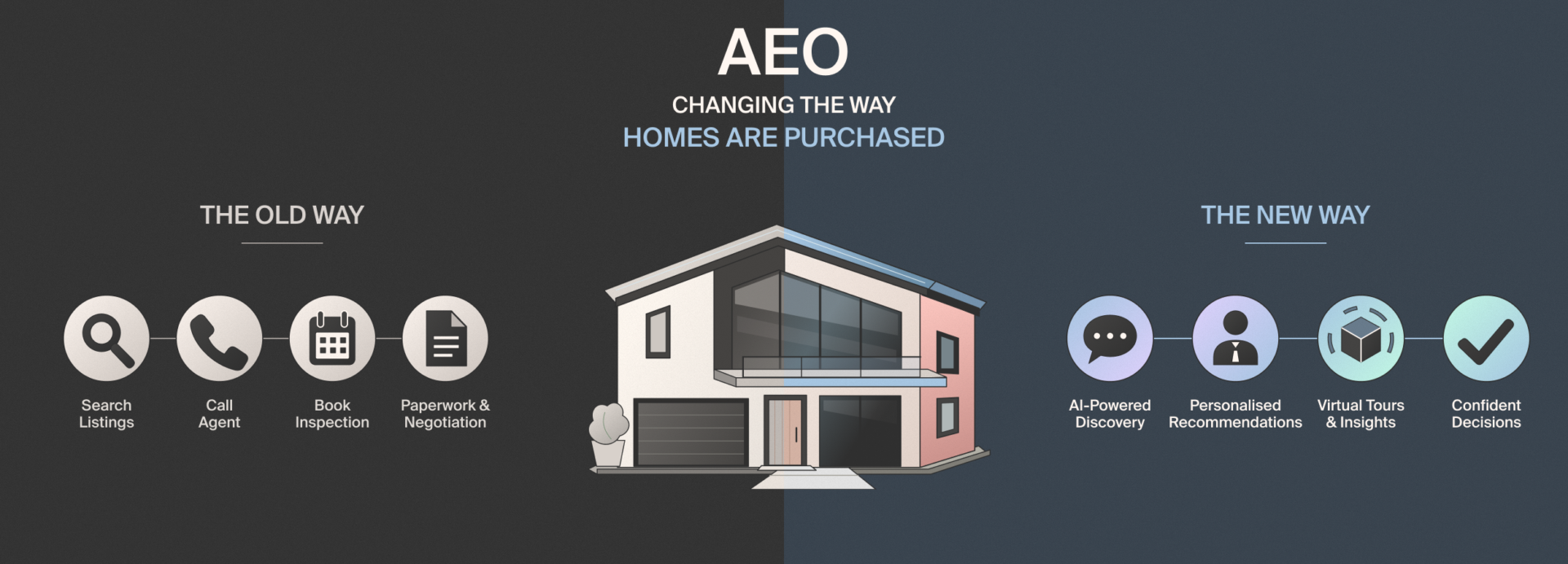
Property search is becoming more conversational. Instead of simply typing a suburb and scrolling through listings, buyers can now ask AI tools exactly what they are looking for, whether that’s the best suburbs for a young family, what a three-bedroom home should cost in a particular area, or which locations offer the right mix of lifestyle and convenience.
The answers they receive can shape what they search for next, which suburbs they consider and which properties or agents make their shortlist – sometimes before they have even opened a real estate portal.
For agencies and agents, this changes what “being found” actually means.
How AI is changing the way buyers research property
Three shifts matter most for property marketing right now.
- Buyers are asking questions instead of typing keywords. AI search tools answer conversational, specific queries, so content written to answer real questions performs better than content built around generic keyword phrases.
- The click happens later. Buyers arrive at a listing or an agency site after they’ve already formed an opinion from an AI-generated summary, not before.
- Trust signals matter more than volume. AI tools tend to pull from sources they judge credible and specific, not simply the ones with the most content published.
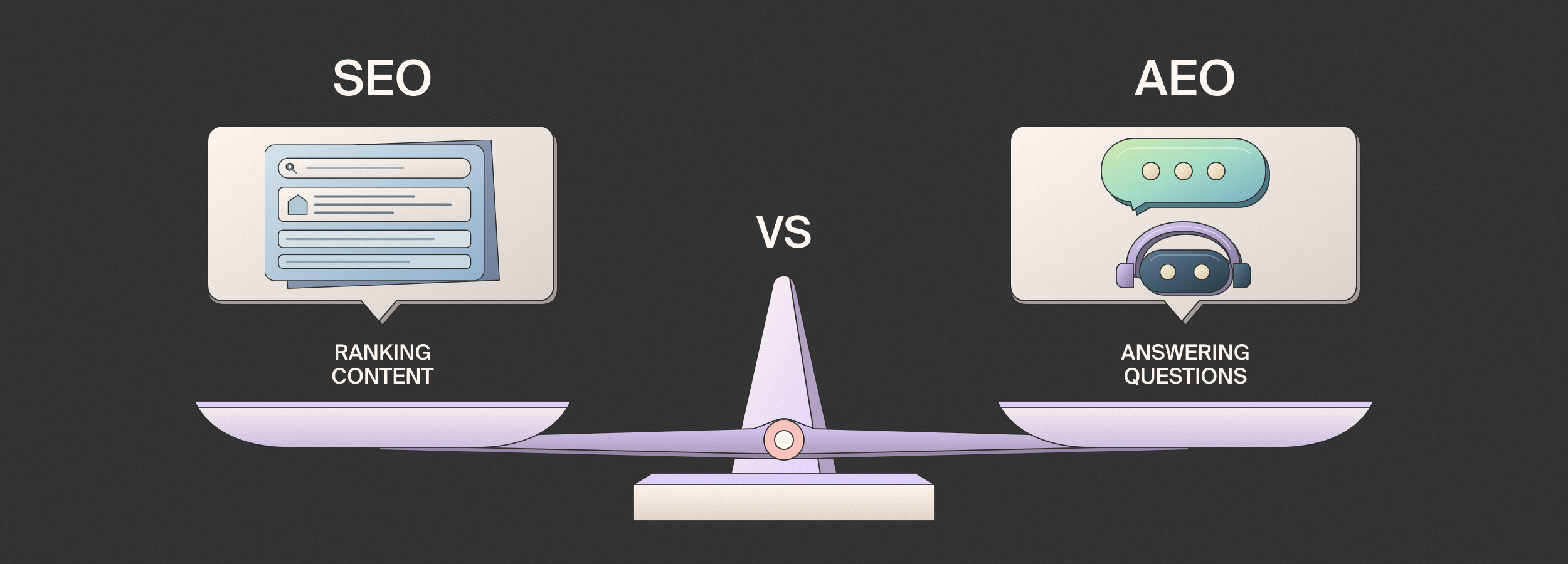
None of this replaces traditional SEO. It sits on top of it.
Where AI fits into the property search journey
Suburb comparisons, price expectations, and “is now a good time to buy” questions are increasingly answered by AI tools before a buyer ever reaches a real estate portal. A buyer might ask an assistant to compare two suburbs on schools, commute time and median price, and get a confident answer built from whatever content the model has indexed and trusts.
If that content doesn’t exist, or exists but isn’t structured in a way AI tools can parse and attribute, the agency isn’t part of that conversation. The buyer still makes a decision. It’s just made without any input from the agent who could have shaped it.
This is a bigger shift for property than for most categories, because the research phase is long and the decisions are expensive. Buyers spend weeks or months comparing suburbs, checking prices and weighing trade-offs before they ever contact an agent. Every one of those research moments is now a chance for AI tools to answer on an agency’s behalf, for better or worse.
What property content needs to do differently
Content written for AI search and content written for people aren’t different things done well. The tools reward clarity: direct answers, real numbers, specific suburbs and streets named, and information organised so a system can lift a section and attribute it cleanly.
That has practical implications for how content gets briefed and structured.
- Answer the actual question in the first sentence or two, not after a warm-up paragraph.
- Use real, current figures, such as median prices, days on market or rental yields, rather than vague claims.
- Structure content with clear headings and short sections that each map to a single question, so tools can extract a clean answer.
- Keep information current. AI tools favour recently updated content when a topic is time-sensitive, and most property content is.
What Sod is doing differently
At Sod, we’re auditing existing property content against the questions buyers are actually asking AI tools, not just the keywords they used to type into Google. Where content answers a question well but is buried inside a long-form guide, we’re pulling it out into its own clearly headed section. Where a client’s suburb or listing pages lack the specific figures AI tools look for, we’re recommending they get added.
We’re also treating agent and agency bios differently. AI tools weigh authorship and expertise signals when deciding what to trust and cite, so a properly attributed, specific bio does more work than it used to.
Where property businesses should focus first
For clients weighing up whether this is worth acting on now: yes, and the changes are low-risk. Sharpening content to answer real buyer questions directly, adding specific local data, and keeping listing and suburb pages current all improve traditional search performance as well as AI visibility. There’s no trade-off between optimising for one and the other.
On priority, we’d start with suburb guides and buyer FAQ content, since that’s where AI tools are most often stepping into the decision before a buyer reaches a portal. Listing copy matters too, but it has a shorter shelf life and less influence on the early research stage.
If it’s useful, we can run this audit against current site content and flag the highest-impact gaps, along with a timeline for addressing them.

-
![]()
Multi-location marketing for franchise brands: how to scale local visibility
Sep 2026 4 min read -
![Jigsaw pieces connecting to highlight how SEO and web accessibility work together.]()
Stop briefing accessibility and SEO separately
Sep 2026 3 min read