Lead volume’s down. Cost per lead isn’t. | July 2026


Each month we share what we’re seeing across property campaigns nationally. July’s been a month of contrasts: softer volume in some corners of the market, standout numbers in others, and a widening gap between teams automating the boring stuff and teams still doing it by hand. Here’s what’s worth knowing.
Volume is down. Structure is what saves you.
Across the board this month we’re seeing lead volume soften, in one account by around 20% month on month, tied to a mix of market caution and the seasonal dip that comes with winter school holidays. Cost per lead on that same account stayed within benchmark. Buyers are still there, just slower to put their hand up.
The below has an average spend of $3,500 /month and the budget is typically weight 70% Meta and 30% Google.
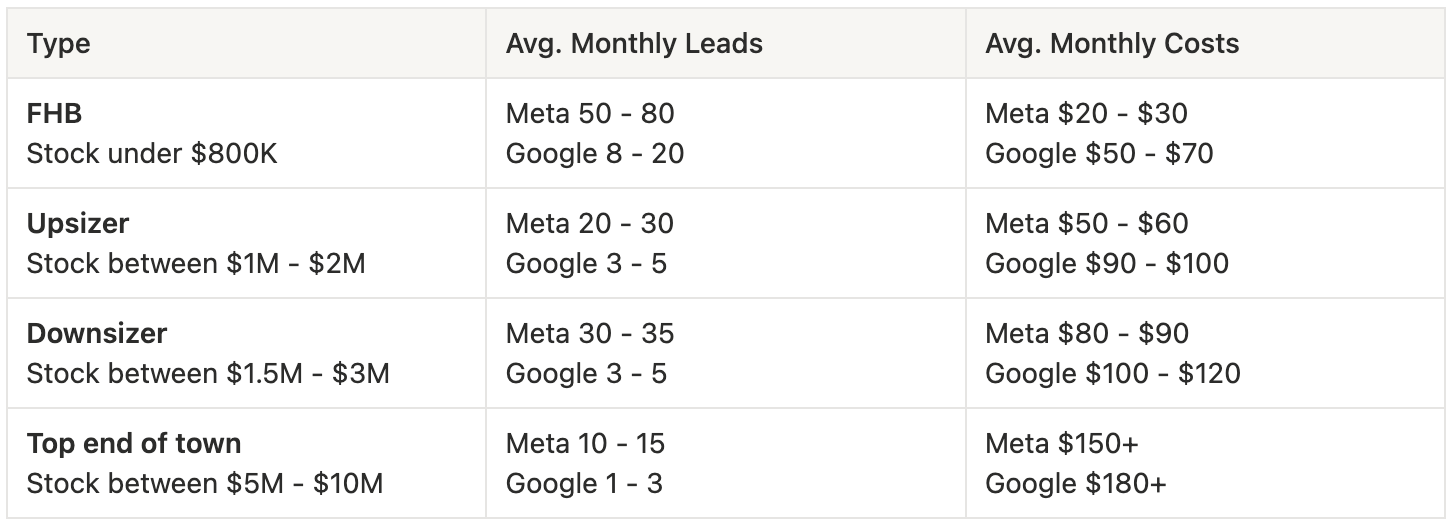
The instinct when volume drops is to cut budget evenly across every campaign. That’s the wrong move. This month we launched two campaigns that landed strong results in their first week regardless of the softer backdrop: one generated over 40 leads in seven days at a cost per lead under $7, the other posted an appointment rate above 12%, both well ahead of what we’d normally expect that early.
Neither result came from a clever hack. Both campaigns had sharp targeting, strong creative and a tight brief from day one. When overall demand softens, the campaigns built on solid fundamentals hold up. The ones that were coasting on a hot market don’t. If you’re reviewing budget this month, protect the campaigns that are structurally sound and fix or pause the ones that aren’t, rather than trimming everything by the same percentage.
The buyer journey just got longer
We’re hearing the same thing from more than one account this month: people are interested, but they’re not ready. They need more reassurance, more information and more time before they commit, particularly with the current economic backdrop making buyers more cautious about timing.
The mistake is treating this as a retargeting problem and running the same ad on loop to anyone who’s shown interest. A longer journey needs a proper nurture sequence, not repetition. That means a structured run of touchpoints over several weeks, each one adding something new: a suburb guide, a construction update, a finance explainer, a q&a, building trust in stages rather than asking for the same commitment every time someone sees your name in their feed. Get this right and you’re not losing those slower buyers, you’re just meeting them on their timeline instead of yours.
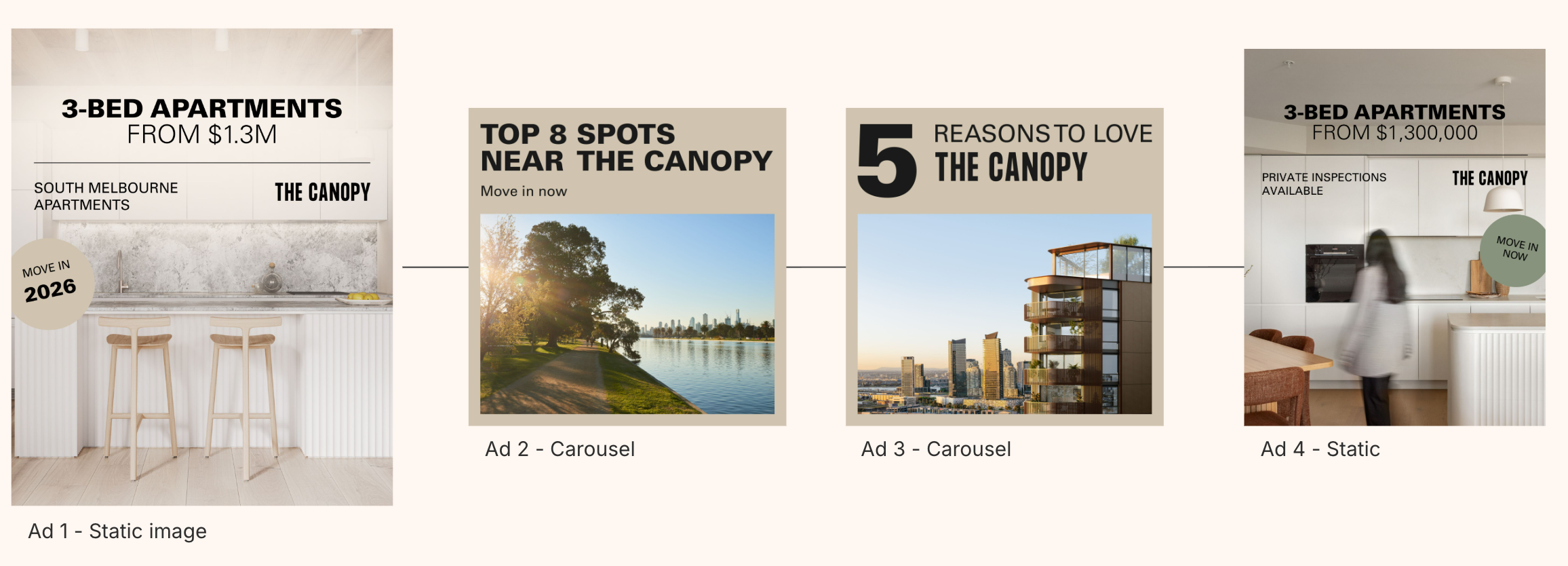
We recommend at least 4 touch points along the remarketing journey. With a hot tip that this set of remarketing ads should be reviewed and updated when data suggests due to ad fatigue. We’d recommend every 8 weeks.
Different stock, different KPIs
As a project moves from broad early-stage stock to only its premium remaining product, a handful of larger or higher-priced residences, the KPIs that worked earlier in the campaign stop making sense. The cost per lead and lead volume you were getting when you had a full range on offer won’t repeat at a much higher price point, and trying to force it usually means chasing volume from buyers who were never going to convert on that stock anyway.
The fix is resetting expectations alongside the stock, not after it. Fewer, better qualified leads, a higher cost per lead that reflects the higher price point, and KPIs built around qualified inspections rather than raw enquiry numbers. Campaigns that make this shift early keep sales conversations sharp. The ones that don’t end up with a sales team fielding enquiries for a product that’s no longer for sale.

Google can now measure your social content in search
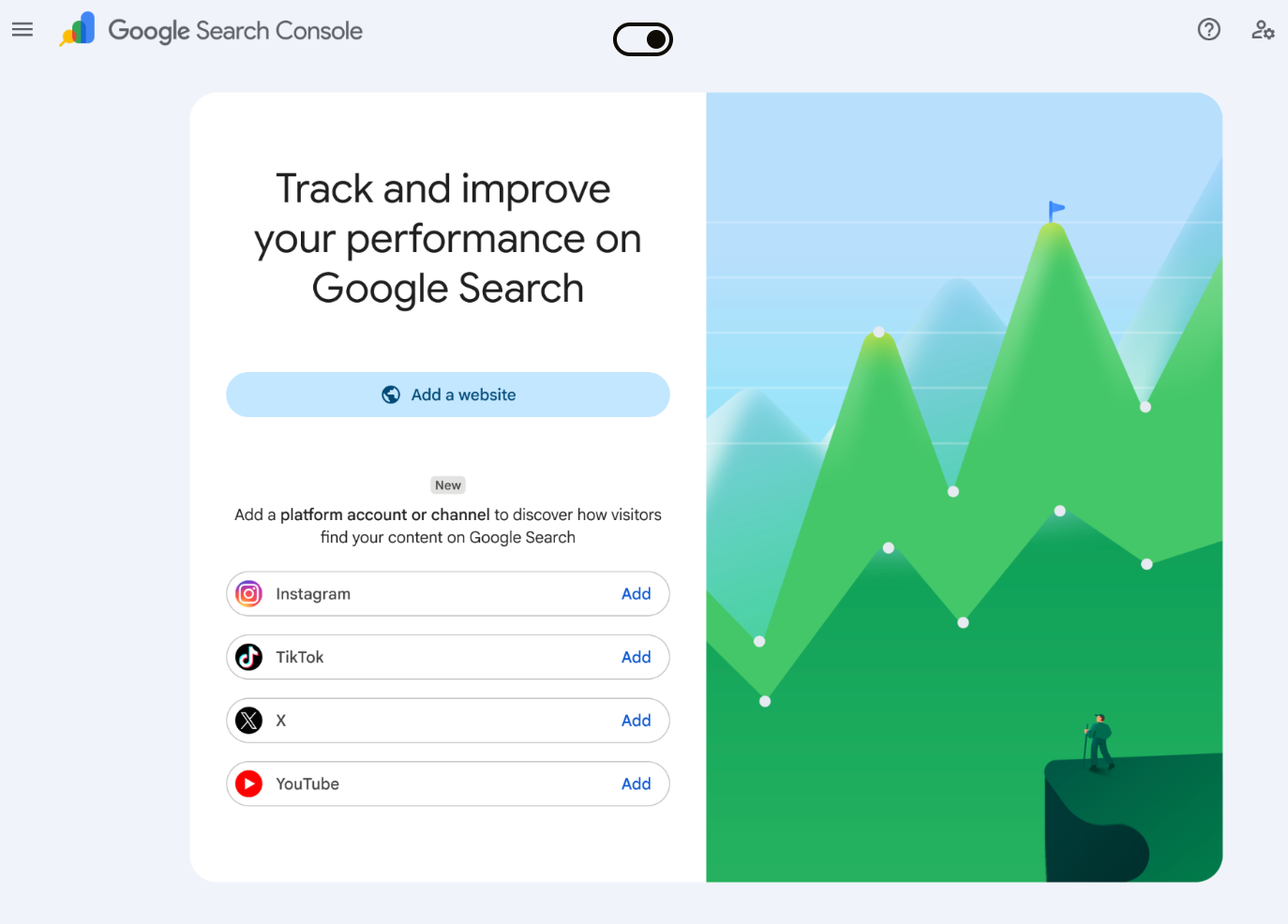
Google Search Console has added a new property type called platform properties, letting you verify your Instagram, TikTok, X or YouTube accounts and see how that content performs in Google Search and Discover. While it will be rolling out gradually over the coming weeks, it’s worth planning for now.
For property, this matters more than it might first seem. A huge amount of buyer discovery now happens through construction reels, project walkthroughs and agent videos, and until now none of that had a real link back to search performance. You could see likes and views, but not whether people were then searching your project name, suburb or building type on Google.
Once this rolls out, you’ll get clicks and impressions for your social posts inside Google Search, filterable by post and by query, plus a trends report on what’s landing and a milestone tracker. The query data is the useful part: the actual words people type into Google after seeing your content, not a platform’s own estimate of engagement.
The bigger shift is what it signals: social content and SEO are no longer separate lanes. If your project’s reels and posts are being briefed purely on trend or aesthetic, there’s now a real data source for the language your audience is actually searching, suburb names, buyer questions, building features.
Once this feature is live here in Australia, it’s worth pulling into how you brief content, not just how you report on it.
SEO and Social have now blurred the lines and should be treated as one.
What we’re recommending this month
- Review your budget allocation, not just your budget total. If volume is softening, protect campaigns with strong fundamentals and fix or pause the weaker ones rather than cutting everything evenly.
- Map out a proper nurture sequence. If your journey is longer than it used to be, a single retargeting ad won’t hold attention. Plan four to six touchpoints that each add something new.
- SEO and social working together. If you are active on socials, we would highly recommend considering working with an SEO agency (like Sod) to help inform the content creation, Enabling you to be more visible in AI overviews.
- Reset your KPIs when your stock mix changes. Don’t let last quarter’s cost per lead benchmark drive this quarter’s decisions if you’re now selling a different product.
As always, happy to share what we’re seeing across the market. No pitch, just data.
-
![]()
Multi-location marketing for franchise brands: how to scale local visibility
Sep 2026 4 min read -
![How AI search is changing the property buyer journey banner]()
How AI Search Is Changing the Property Buyer Journey
Sep 2026 4 min read