Hospitality Marketing: A Holistic Approach to Venue Growth

One of the biggest misconceptions we see in hospitality marketing is that growth comes from a single channel.
A venue may have a strong social following, so social media becomes the focus. A campaign generates a spike in bookings through paid ads, so the budget gets concentrated there. SEO starts performing well, so everything shifts towards search.
The reality is that the venues seeing the strongest long-term results are rarely relying on one channel. Search supports social. Paid ads support SEO. Websites support conversions. Reviews strengthen visibility. Each channel makes the others work harder, from the first time someone hears about a venue through to the moment they book.
That’s the shift worth making: from picking a channel to building the connections between them.
Why a multi-channel hospitality marketing strategy delivers better results
One of the consistent patterns we see across hospitality groups is that customers rarely discover, evaluate and book a venue through a single interaction.
They might first see a venue through organic social media. A few days later they search the venue name on Google. They browse the website, check reviews, visit the function package page and then leave without enquiring. A week later, a retargeting campaign brings them back.
No single channel deserves full credit for that conversion.
This is why hospitality marketing works best when venues stop viewing channels in isolation and start viewing them as part of a broader strategy. Clicks and impressions aren’t the goal. The goal is a connected experience that attracts more customers, increases venue bookings and supports long-term business growth.
How SEO and AEO can help hospitality venues generate compounding organic traffic
The venues seeing the strongest organic growth today aren’t necessarily producing more content. They’re strengthening the foundations underneath it: technical performance, content quality and authority working together.
Australian Venue Co’s loyalty platform, The Pass, is a strong example. Through a strategic focus on SEO, content and search optimisation, the platform has achieved substantial growth in online visibility and organic traffic over time.
Image 2: The image below reflects the compounding keyword visibility for “The Pass”
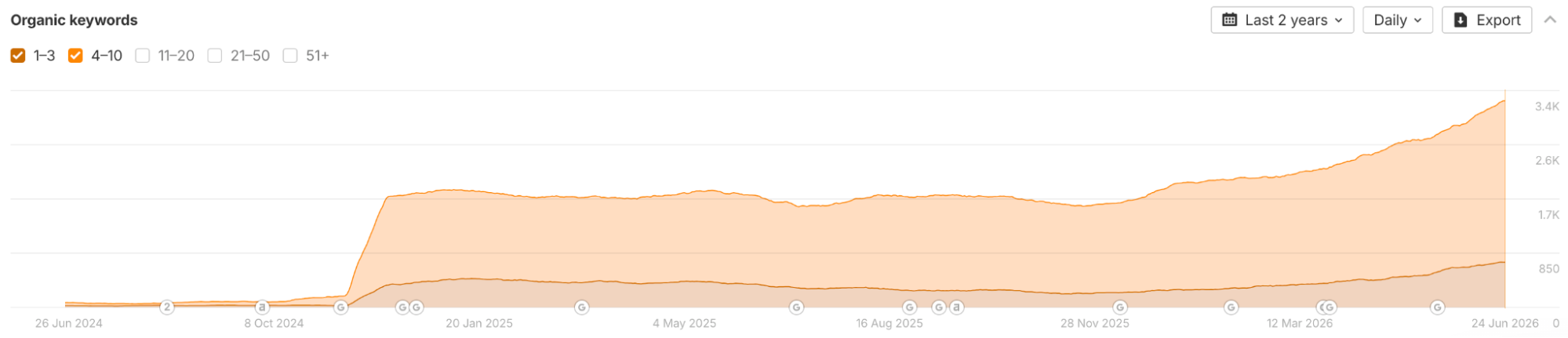
The reason SEO remains such a valuable investment is because it compounds. Unlike paid ads, which stop delivering the moment budget is paused, organic visibility continues generating traffic long after content has been published.
This is also where AEO becomes increasingly relevant.
Many businesses treat AEO as a separate discipline. In reality, the strongest AEO strategies are built on the same foundations as strong SEO. Helpful content, technical performance, authority signals and brand credibility all contribute to how search engines and AI-powered platforms understand a business.
The difference is that AI platforms are evaluating a much wider digital footprint. Social media activity, customer reviews, brand mentions, community discussions and overall online visibility all contribute to how AI systems interpret authority and trustworthiness.
Ranking in a single search engine no longer determines visibility. A credible presence everywhere customers search does.
Understanding what is important for venues
Function bookings should be the primary focus of paid advertising because they represent one of the highest-value revenue opportunities for hospitality venues.
While customer service, food, atmosphere and specials naturally encourage repeat visits and steady table bookings, private functions require a different approach. Customers rarely book a function by simply walking past a venue or visiting for dinner. Instead, they actively research venues online, compare packages and enquire after seeing targeted campaigns. Every day a function space sits unbooked is a missed revenue opportunity.
Through our work with various hospitality clients, we’ve consistently seen stronger commercial outcomes by prioritising function bookings through Meta and Google Ads. By promoting function packages to people actively planning birthdays, corporate events and celebrations, venues can generate higher-value enquiries while allowing the day-to-day dining experience to continue driving regular customer bookings and repeat visitation.
The most effective digital marketing for hospitality recognises that different revenue streams are influenced by different channels. Great hospitality fills tables, while strategic paid advertising fills function spaces.
Integrating SEO, paid ads and social media for short and long-term performance
The strongest hospitality marketing results rarely come from a single campaign, platform or tactic.
Instead, sustainable venue growth is typically achieved when SEO, paid ads, organic social, website optimisation, content marketing and customer retention initiatives work together as part of a broader full-funnel marketing strategy.
This is something we’ve consistently observed across hospitality groups such as Australian Venue Co, where multiple channels reinforce one another to improve visibility, strengthen brand awareness and support long-term growth.
Paid ads create immediate demand. SEO builds long-term visibility. Social media strengthens customer relationships. Websites convert attention into action.
When every channel contributes to a larger objective, hospitality marketing becomes more than a way to fill seats. It becomes a framework for sustainable business growth.
FAQs
What is hospitality marketing?
Hospitality marketing refers to the strategies used to attract, engage and retain customers for restaurants, pubs, bars, event venues and hospitality groups. It often includes SEO, paid ads, organic social, content marketing and customer retention initiatives.
How can digital marketing increase venue bookings?
Digital marketing helps venues improve visibility, attract more customers and create multiple opportunities for bookings through search, social media, paid advertising and website optimisation.
Why is SEO important for hospitality businesses?
SEO helps hospitality venues appear when customers are actively searching for dining experiences, events, functions and local venues. It provides long-term visibility and can generate compounding organic traffic over time.
What is a full-funnel hospitality marketing strategy?
A full-funnel marketing strategy supports customers from initial awareness through to booking and repeat visitation, by integrating multiple marketing channels into a connected customer experience.
-
![]()
Cut Meta for two weeks, lose 80% of your leads
Aug 2026 3 min read -
![A banner with the YouTube logo.]()
YouTube SEO: A missed opportunity for brands
Aug 2026 2 min read